Am I balding?
Is my crown thinning, or is it just my whorl?
Everyone has a whorl at the crown, a spiral where hair grows outward in different directions, and the center often shows some scalp, especially under overhead light or when wet. That alone isn’t balding. Crown thinning is different: the exposed area grows over time, and the hairs around it get finer compared with the hair at the back of your head. The way to tell them apart is to compare hair thickness, and to check whether the spot changes over a few months.
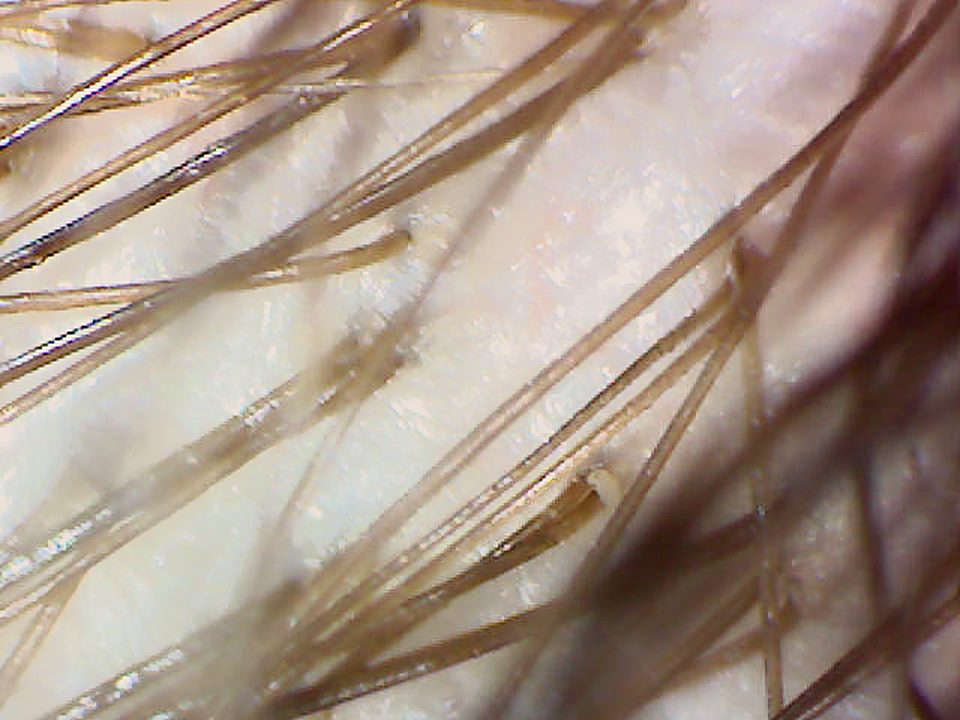
What a normal whorl looks like
- A spiral pattern with hair radiating out from a center point (some people have two).
- A small parted area at the center, which can look bigger when hair is short, wet or freshly washed.
- Hairs around it are as thick as the rest of your hair.
- It stays the same size over months and years.
Signs of crown thinning
- The exposed area grows, spreading outward from the whorl over months.
- Finer hairs around the center: thinner, shorter, lighter than hair elsewhere (miniaturization).
- Scalp visible even when hair is dry and styled, not just under harsh light.
- Family history of crown balding, or hairline changes at the same time (mature vs receding hairline).
| Normal whorl | Crown thinning |
|---|---|
| Same size over time | Spreading over months |
| Full-thickness hairs around it | Finer hairs around it |
| Scalp shows mainly when wet or under overhead light | Scalp shows even when dry and styled |
What makes a crown look worse than it is
You rarely see your own crown except in photos, and crown photos are especially misleading:
- Overhead light shines straight down onto the whorl.
- Wet hair clumps and opens the part.
- Phone held close exaggerates the center of the frame.
- Head tilted down opens the whorl.
Many people first notice their crown in a harsh-light photo someone else took, and panic over a whorl they’ve always had. See why progress photos lie for how to photograph it consistently.
How to check
- Compare thickness, not appearance. Measure the hair just outside your whorl and at the back of your head (your control). Similar thickness suggests a normal whorl; noticeably finer hair at the crown suggests thinning.
- Recheck in 3 months in the same spots. A whorl stays put; thinning moves.
- If it’s thinning, see a dermatologist. The crown often responds well to treatment, so it’s worth acting early.
Stop guessing about your crown
GraftReport measures crown hair thickness against your own control area at the back of your head, and shows whether it’s changing when you rescan.
Get the kit — $199How the balding check worksCommon questions
Is it normal to see scalp at the crown?
Yes, a little. Everyone has a whorl where hair grows in a spiral, and the center can show some scalp, especially under overhead light or when hair is wet.
How do I know if my crown is thinning?
Signs include the exposed area spreading over months, finer hairs around it compared with hair at the back of your head, and scalp showing even when hair is dry and styled.
Why does my crown look bald in photos?
Overhead light, wet hair, a close phone and a tilted head all open the whorl and exaggerate visible scalp. Compare photos only when taken the same way, or measure hair thickness instead.
Does crown thinning respond to treatment?
The crown often responds well to medical treatment, which is one reason to check early. A dermatologist can advise on options.
Sources
- Rakowska A et al. Dermoscopy in female androgenic alopecia: method standardization and diagnostic criteria. Int J Trichology. 2009;1(2):123–130. Criteria summarized at dermoscopedia.org
This guide is general information, not medical advice. Hair loss has many causes; see a dermatologist for sudden, patchy or painful hair loss, or before starting or stopping any medication.