Am I balding?
Diffuse thinning vs pattern baldness: what’s the difference?
Pattern baldness thins hair in a predictable shape, at the temples and crown, by gradually shrinking hairs. Diffuse thinning spreads across the whole scalp and has several possible causes. The most common is telogen effluvium: a burst of shedding a few months after a trigger such as illness, surgery, major stress or a crash diet, which usually recovers. The key difference up close: pattern loss shows a mix of thick and thin hairs; shedding loses hairs but the ones left are normal thickness. Diffuse thinning deserves a doctor’s visit.
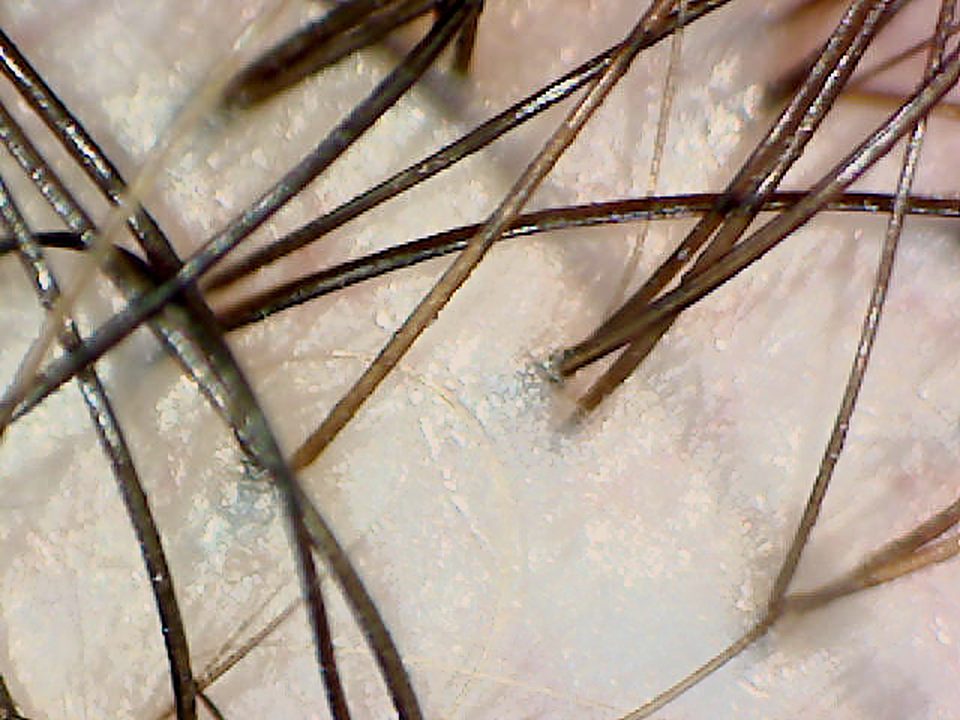
What pattern baldness looks like
- Follows a pattern: temples and hairline, crown, or both (the Norwood scale).
- Develops slowly, over years.
- Driven by miniaturization: hairs get progressively thinner.
- The back and sides usually stay full.
Some men have diffuse patterned loss: even thinning across the whole top, with the back and sides still permanent. That’s still pattern baldness. Rarer diffuse unpatterned loss reaches the back and sides too (see DUPA).1
What diffuse thinning looks like
- Thinning all over, including the sides and back, rather than in a shape.
- Often noticed as a sudden increase in shedding, or a thinner ponytail or part.
- Can start relatively quickly, over weeks to months.
Telogen effluvium
The most common cause of sudden diffuse shedding. A physical or emotional shock pushes many growing hairs into their resting phase at once, and they shed together about two to three months later, which is why people rarely connect the shedding to the cause. Common triggers include high fever or illness, surgery, childbirth, crash dieting, major stress, and some medication changes. It usually settles on its own once the trigger has passed, though regrowth takes months to show.
Other causes of diffuse thinning include thyroid problems, low iron, and some medications. These are things a doctor can test for.
Telling them apart
| Pattern baldness | Telogen effluvium | |
|---|---|---|
| Where | Temples, hairline, crown | All over |
| Speed | Slow, over years | Sudden, weeks to months |
| Shedding | Modest | Heavy, then eases |
| Remaining hairs | Mixed: thick next to thin | Mostly normal thickness |
| Top vs back | Top finer than back | Similar |
The last two rows are why magnification helps. Pattern baldness shows a spread of hair thicknesses and finer hair on top than at the back, the core of dermatologists’ diagnostic criteria.2 Shedding removes hairs, but the ones remaining look like your normal hair. The two can also overlap: a shedding episode can reveal underlying pattern loss.
When to see a doctor
See a doctor or dermatologist if thinning is diffuse or sudden, if you shed in clumps or have patches, if your scalp is itchy, red, scaly or painful, or if you have other symptoms such as fatigue or weight change. Blood tests and a scalp exam can sort out causes that need treating.
See what kind of thinning you have
GraftReport measures hair thickness and how mixed each zone is, against your own control area at the back of your head. Pattern loss and shedding look different in those numbers. Bring the report to your doctor.
Get the kit — $199How the balding check worksCommon questions
What is the difference between diffuse thinning and male pattern baldness?
Pattern baldness thins hair in a predictable shape (temples and crown) by gradually shrinking hairs. Diffuse thinning spreads across the whole scalp and often comes from shedding, such as telogen effluvium, or medical causes.
What causes sudden diffuse hair thinning?
Common causes include telogen effluvium after illness, surgery, stress or crash dieting, as well as thyroid problems, low iron and some medications. A doctor can test for these.
Does telogen effluvium grow back?
It usually settles once the trigger has passed, though regrowth takes months to show. Persistent shedding should be checked by a doctor.
Can diffuse thinning be male pattern baldness?
Yes. Diffuse patterned loss thins evenly across the top while the back and sides stay permanent. Magnification helps tell it apart from shedding.
Sources
- Bernstein Medical. Diffuse patterned and unpatterned hair loss. bernsteinmedical.com
- Rakowska A et al. Dermoscopy in female androgenic alopecia: method standardization and diagnostic criteria. Int J Trichology. 2009;1(2):123–130. Criteria summarized at dermoscopedia.org
This guide is general information, not medical advice. Hair loss has many causes; see a dermatologist for sudden, patchy or painful hair loss, or before starting or stopping any medication.