Am I balding?
Mature hairline vs receding hairline: how to tell the difference
Most men’s hairlines move up a little between their late teens and twenties. That’s a mature hairline: it rises evenly, keeps full-thickness hairs right to the edge, and then stops. A receding hairline keeps moving, usually deeper at the temples, and the hairs along the front get finer and wispier. The shape alone can’t tell you which you have; the thickness of the hairs at the front, and whether it’s still changing, can.
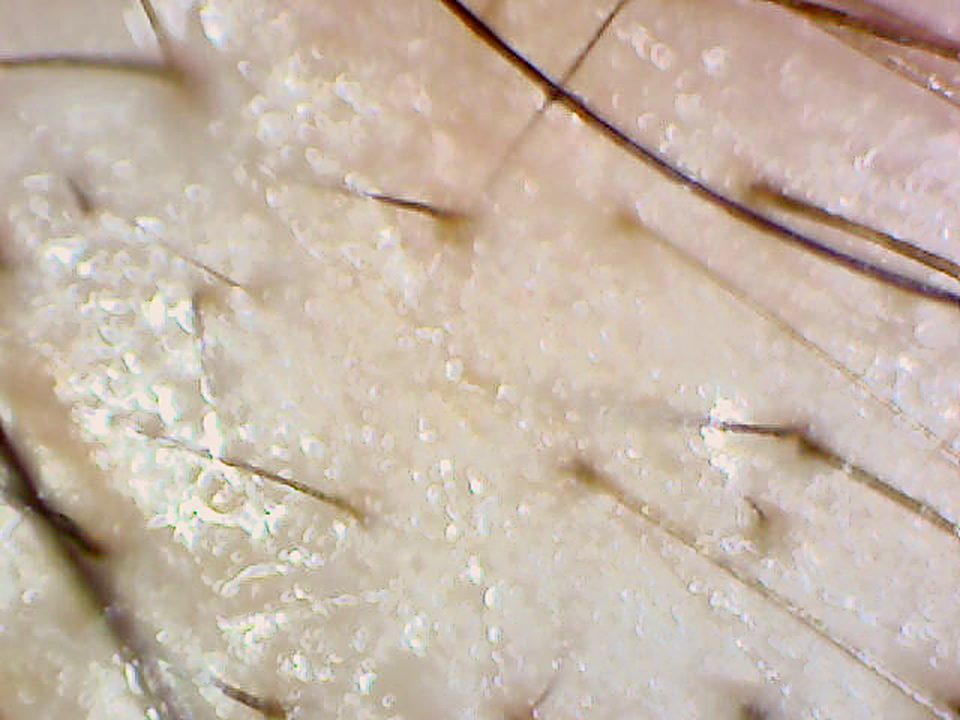
What a mature hairline looks like
Most adolescent hairlines sit low and straight. Through the late teens and twenties, most men’s hairlines rise slightly and take on a gentle M or a straighter, slightly higher line. That’s normal maturation, not balding. Typical features:
- It moves up modestly and fairly evenly. A common rule of thumb is that a mature hairline sits about a finger-width above your top forehead crease.
- The hairs at the very edge are full thickness, like the rest of your hair.
- It stops. Compare photos a year apart in the same light; a mature hairline looks about the same.
Signs it’s receding
- Fine, wispy hairs at the front. The strongest single sign. Pattern loss shrinks hairs before it removes them, so the edge turns into thin, short, almost translucent hairs (here’s how miniaturization works).
- Temples keep going back, deepening the M, rather than settling.
- Thinning behind the hairline, not just at the edge; more scalp showing through the front third under overhead light.
- Family history of pattern baldness, especially at a similar age.
- The crown is thinning too. See crown thinning or cowlick.
| Mature | Receding |
|---|---|
| Moves up a little, then stops | Keeps moving month after month |
| Full-thickness hairs at the edge | Fine, wispy hairs at the edge |
| Fairly even across the front | Deeper at the temples |
| Density behind the hairline unchanged | Front third getting see-through |
A three-month test
Because the difference is about change and hair thickness, you can’t settle it from one mirror check. Do this instead:
- Measure the hair at your temples and front hairline, and at the back of your head as a control.
- Repeat in the same spots in 3 months.
- If the front is close to your control and holding steady, that’s consistent with a mature hairline. If the front is much finer than your control or dropping, that’s early pattern loss.
Avoid comparing selfies; lighting and angle change how a hairline looks more than months of real change (why progress photos lie).
If it’s receding
Early is the best time to act: hairs that have miniaturized but not disappeared respond best to treatment. See a dermatologist to confirm the diagnosis and discuss options, and take a baseline measurement before you start anything, so you can tell later whether it’s working.
Settle it with measurements
GraftReport compares the hair at your hairline and temples with your own control area at the back of your head, then shows whether it’s changing each time you rescan.
Get the kit — $199How the balding check worksCommon questions
How do I know if my hairline is maturing or receding?
A maturing hairline rises a little, keeps full-thickness hairs at the edge, and then stops. A receding hairline keeps moving, usually deeper at the temples, with finer, wispier hairs along the front.
At what age does a hairline mature?
Usually between the late teens and the twenties. It is a modest, fairly even rise that then stays put.
Is an M-shaped hairline balding?
Not necessarily. Many mature hairlines have a slight M. What matters is whether the temples keep receding and whether the hairs at the front are getting finer.
Can a receding hairline grow back?
Hairs that have thinned but not disappeared can respond to treatment, which is why acting early matters. Results at the front hairline are often more modest than at the crown. A dermatologist can advise.
Sources
- Rakowska A et al. Dermoscopy in female androgenic alopecia: method standardization and diagnostic criteria. Int J Trichology. 2009;1(2):123–130. Criteria summarized at dermoscopedia.org
This guide is general information, not medical advice. Hair loss has many causes; see a dermatologist for sudden, patchy or painful hair loss, or before starting or stopping any medication.