Hair transplants
Donor area thinning (DUPA): why some men can’t get a hair transplant
Diffuse unpatterned alopecia (DUPA) is thinning that reaches the back and sides of the head, not just the top. It matters because those areas are where transplant grafts come from. If the donor hair is thinning too, there’s no truly permanent hair to move, so people with DUPA are generally not good transplant candidates. It’s uncommon in men (often cited at around 5%) but more common in women.
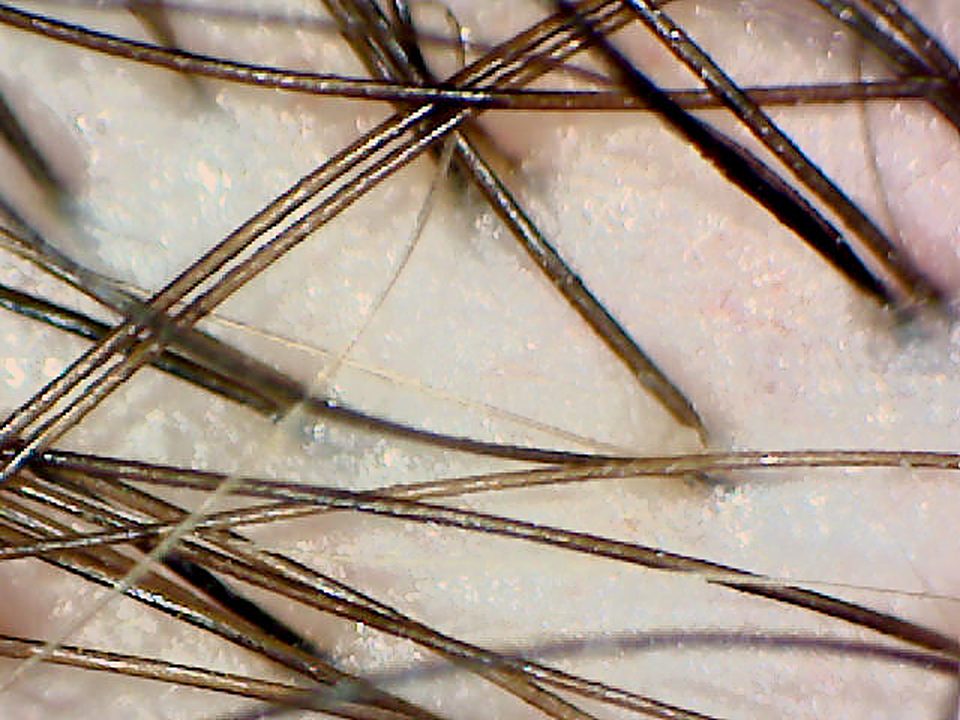
What DUPA is (and isn’t)
Two similar-sounding patterns are easy to confuse:1
| Diffuse patterned (DPA) | Diffuse unpatterned (DUPA) | |
|---|---|---|
| Where it thins | Evenly across the top | Top, and back and sides |
| Donor area | Stays permanent | Thins too |
| Transplant candidate? | Often yes | Generally no |
DUPA is different from the classic Norwood pattern, where the horseshoe of hair around the back and sides stays put. It’s also distinct from temporary diffuse shedding, such as telogen effluvium after illness (see diffuse thinning vs pattern baldness).
Why it rules out most transplants
A transplant moves hair; it doesn’t create it. Grafts from the back keep growing on top because that donor hair resists the hormone that shrinks follicles. In DUPA that resistance isn’t there: the donor hair is shrinking too, so transplanted grafts may thin over time, and harvesting from an already thinning area makes the back look thin as well.1
Signs to watch for
- Hair at the back and sides looks less dense than it used to, or you can see scalp there under bright light.
- Thinning on top looks diffuse rather than following a clear receding or crown pattern.
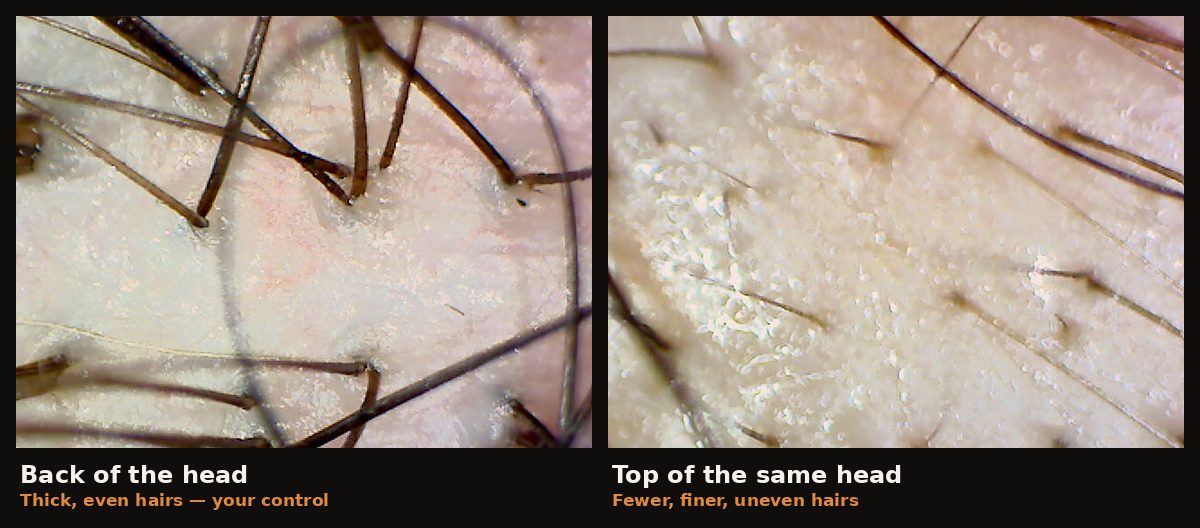
- A mix of fine and thick hairs in the donor area under magnification.
- It can take time to show: it often isn’t clear until the late twenties, so young patients may not show it yet.1
How it’s checked
Surgeons look for miniaturization in the donor area: changes in hair diameter at the back and sides, not just on top.1 It’s the same measure dermatologists use on top when diagnosing pattern loss, where a wide spread of hair thicknesses is a key criterion.2
Healthy donor hair is thick and even. Donor hair affected by DUPA becomes a mix, with more fine hairs and wider variation in thickness. Because the change is gradual, measuring more than once over a few months is more telling than a single look, especially if you’re young.
If you’re concerned about DUPA, see a dermatologist or an experienced hair restoration surgeon. It changes the plan, and sometimes the right plan is no surgery.
Check your donor area before anyone quotes you grafts
GraftReport’s donor check measures hair thickness and evenness across the back and sides, and flags zones that are drifting thin. Rescan over a few months to see whether it’s changing.
Get the kit — $199How the donor check worksCommon questions
What is DUPA hair loss?
Diffuse unpatterned alopecia is thinning that affects the back and sides of the head as well as the top. Because the back and sides are the usual donor area for transplants, it usually makes someone a poor transplant candidate.
Can you get a hair transplant with DUPA?
Generally not, because the donor hair is not permanent. Transplanted grafts may thin over time, and harvesting from a thinning area can make the back look thin too. A specialist should assess each case.
What is the difference between DPA and DUPA?
Diffuse patterned alopecia thins evenly across the top while the back and sides stay permanent, so transplants are often possible. Diffuse unpatterned alopecia thins the back and sides too.
How common is DUPA?
It is often cited as affecting around 5% of men, and it is more common in women.
Sources
- Bernstein Medical. Diffuse patterned and unpatterned hair loss. bernsteinmedical.com
- Rakowska A et al. Dermoscopy in female androgenic alopecia: method standardization and diagnostic criteria. Int J Trichology. 2009;1(2):123–130. Criteria summarized at dermoscopedia.org
This guide is general information, not medical advice. Hair loss has many causes; see a dermatologist for sudden, patchy or painful hair loss, or before starting or stopping any medication.