Hair transplants
Body hair transplants: when beard and chest hair make sense
A body hair transplant (BHT) uses hair from the beard, chest or elsewhere to add grafts when scalp donor hair isn’t enough, most often at Norwood 6–7 or for repairs. Beard hair is usually the best body donor: in one comparison, beard grafts survived as well as or better than scalp grafts at one year (about 95% vs 89%), while chest hair did worse (about 75%). Body hair grows differently from scalp hair, so it’s used to add fullness behind the hairline, not to build the hairline itself.
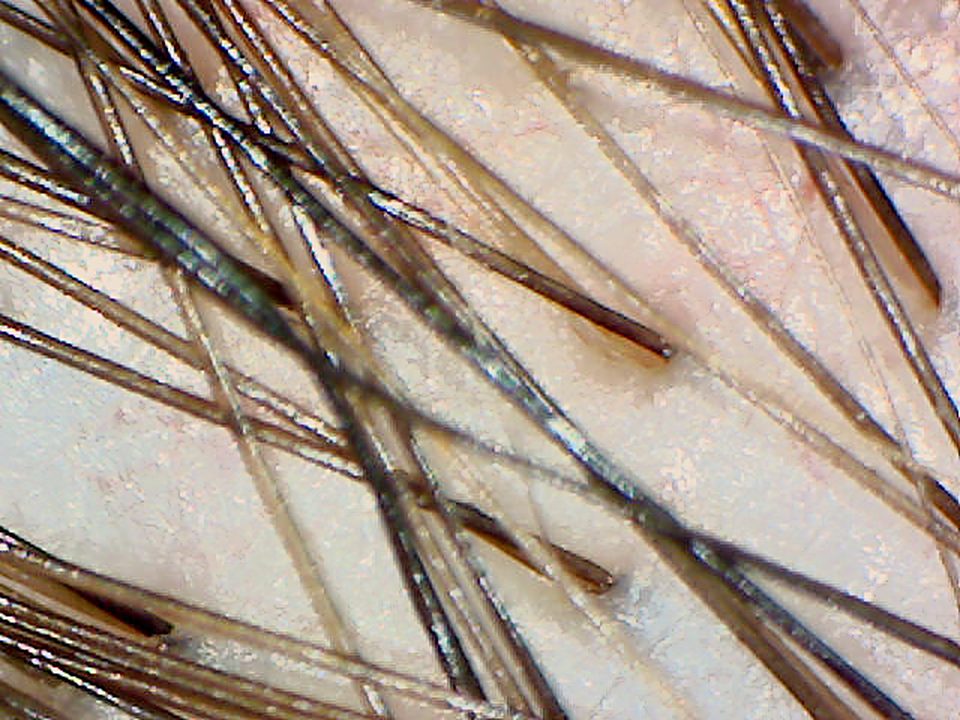
Who body hair transplants are for
Body hair is a supplement, not a first choice. Surgeons usually consider it when:
- Scalp donor supply can’t cover the area, common at Norwood 6–7.
- The scalp donor area was over-harvested in earlier procedures.
- Scars need covering, for example from an old strip procedure.
It’s a specialized technique, and fewer surgeons do it routinely than standard scalp FUE. Ask how many body hair cases a surgeon has done and to see results.
Beard to scalp
Beard hair is the most common body donor, and the best studied. In a small study that grafted scalp, beard and chest hair into the same patients with Norwood 6–7 loss, one-year survival was:1
| Donor source | Survival at 2 months | Survival at 1 year |
|---|---|---|
| Scalp | 60% | 88.7% |
| Beard | 70% | 94.7% |
| Chest | 46.7% | 75.3% |
The study was small (5 patients), but its direction matches common surgical experience: beard grafts take well. Beard hairs are usually thick and coarse, so each one covers a lot of scalp, which makes them good for adding density in the crown and mid-scalp.
Things to weigh: beard grafts are mostly single hairs; the texture is coarser and sometimes curlier than scalp hair; and harvesting leaves tiny dot scars, usually under the chin and jaw, which matter more if you sometimes shave clean.
Chest and other body hair
Chest, abdomen, arm and leg hair can also be used, but results are less predictable. In the same study chest grafts had the lowest survival.1 Body hair also tends to have a shorter growth phase than scalp hair, so it may not grow as long. It’s best for blending and adding density in less visible areas.
Limits and trade-offs
- Not for the hairline. Body hair texture rarely matches a natural front hairline; scalp hair is used there.
- Variable growth. Survival and final length are less predictable than scalp grafts, especially for chest and limb hair.
- Scarring in new places. Small dot scars on the beard area or body.
- Fewer specialists and higher cost. Harvesting body hair is slower and more technically demanding.
Know your scalp donor first
Whether you need body hair at all depends on what your scalp donor area can supply, and whether it’s healthy. Many people assume they’ll need body hair when their scalp donor would cover the plan; others assume they’re fine when their donor edges are already thinning. Start with your scalp donor supply, then decide whether body hair is worth exploring.
Find out if your scalp donor is enough
GraftReport’s donor check measures hair thickness and evenness across your donor zones, so you know whether you’re a scalp-only case or should be asking about beard hair.
Get the kit — $199Try the graft calculatorCommon questions
Can beard hair be transplanted to the scalp?
Yes. Beard hair is the most common body donor for scalp transplants. In a small comparison study, beard grafts survived at about 95% at one year, slightly higher than scalp grafts (about 89%).
Does chest hair work for hair transplants?
It can, but results are less predictable. In the same study, chest grafts survived at about 75% at one year, and body hair often grows shorter than scalp hair.
Who needs a body hair transplant?
Mainly people whose scalp donor hair cannot cover the area they want treated, often at Norwood 6 to 7, or who have had earlier procedures deplete their scalp donor area.
Can body hair be used for the hairline?
Usually not. Body hair texture rarely matches a natural front hairline, so surgeons generally use scalp hair at the front and body hair behind it.
Sources
- Gupta J, Chouhan K, Kumar A, Chandrasegaran A. A comparative study on the rate of anagen effluvium and survival rates of scalp, beard, and chest hair in hair restoration procedure of scalp. J Cutan Aesthet Surg. 2018. jcasonline.com
This guide is general information, not medical advice. Hair loss has many causes; see a dermatologist for sudden, patchy or painful hair loss, or before starting or stopping any medication.