Hair transplants
Am I a good hair transplant candidate? What surgeons check in your donor area
A good candidate has pattern hair loss that’s been diagnosed, a donor area that’s dense and genuinely permanent, loss that’s reasonably stable, and expectations that match their donor supply. The donor area matters most: a transplant only moves hair, so if the back and sides are thin or thinning themselves, there’s little to move. Age, hair characteristics and willingness to treat ongoing loss also count.
The seven things surgeons weigh
- Diagnosis. Pattern hair loss responds to transplants; some other causes (patchy loss, scarring conditions, shedding from illness or stress) don’t, or need treating first.
- Donor density. How many follicular units per cm² at the back and sides. It sets the size of your supply (how supply is estimated).
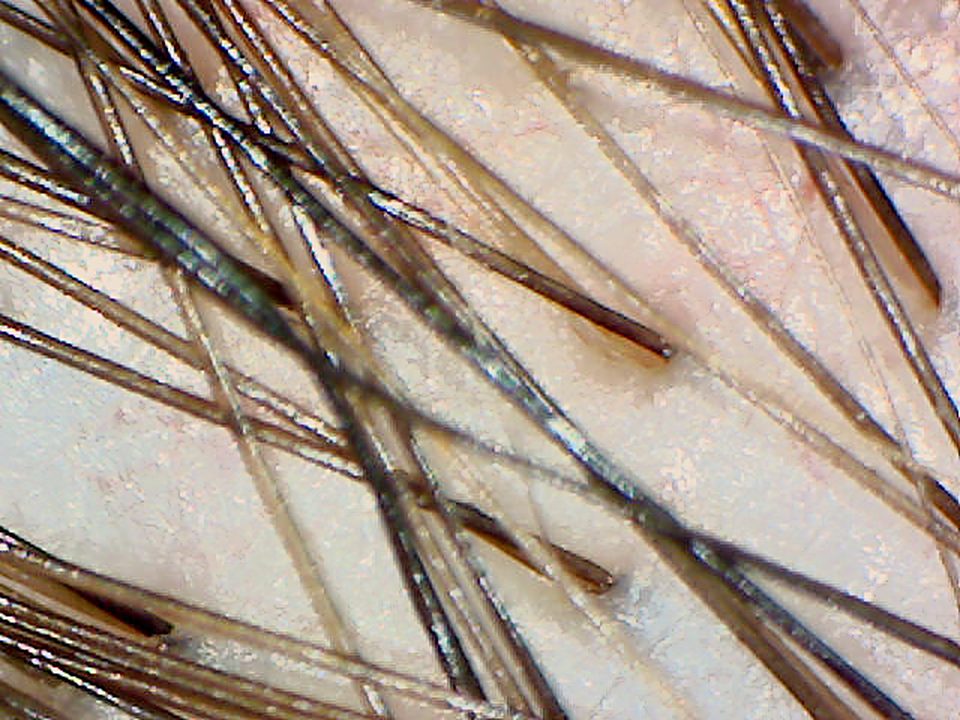
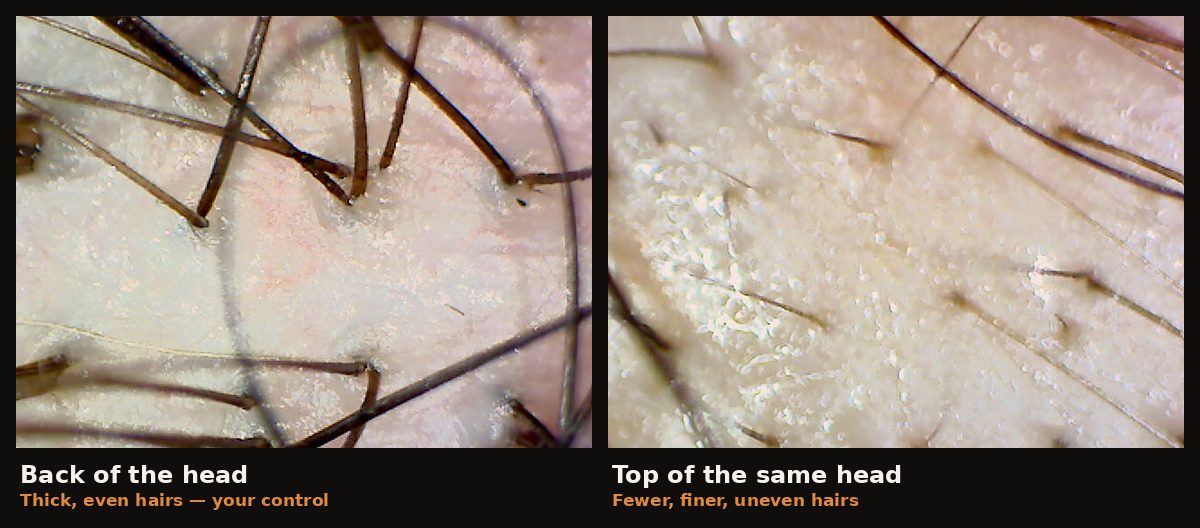
- Donor thickness and evenness. Thick, uniform donor hair covers well and is likely permanent. A mix of thick and fine hairs in the donor area is a warning sign.
- Stability. Is the loss still progressing quickly? Fast-moving loss makes results harder to plan.
- Age. Younger patients’ final pattern is hard to predict (transplants at 25 vs 35).
- Hair characteristics. Thickness, curl and color contrast change how far each graft goes.
- Expectations and a plan for the future. Including medical treatment to protect the hair you’re not transplanting.
Why the donor area decides most cases
Transplants work because hair from the back and sides is usually resistant to the hormone that shrinks hair on top, and keeps that resistance when moved. That only holds if the donor hair really is permanent. In diffuse unpatterned alopecia (DUPA) the back and sides thin too, and these patients are generally not good candidates because there’s no truly permanent hair to use.1
Under magnification, the warning sign is miniaturization in the donor area: a wider spread of hair thicknesses and more fine hairs than healthy donor hair has. Dermatologists use the same idea when diagnosing pattern loss on top.2
Common reasons people are turned away
- Donor area too thin, or thinning (DUPA).
- Very young, with loss still moving fast and no medical treatment in place.
- Expectations beyond what their donor supply can deliver, often at Norwood 6–7.
- Hair loss from another cause that needs a medical workup first.
How to prepare
- Know your Norwood stage and how long it’s been stable.
- Know your donor area: thickness, evenness, and whether the edges near the temples and nape are thinning.
- Track your hair for a few months so you can show a trend, not a guess.
- Bring a list of questions (here are the ones worth asking).
Check your donor area first
GraftReport’s donor check measures thickness and evenness across your donor zones and flags thinning edges, before anyone quotes you a graft count.
Get the kit — $199How the donor check worksCommon questions
Who is not a good candidate for a hair transplant?
People whose donor hair at the back and sides is thin or thinning (such as diffuse unpatterned alopecia), people whose hair loss has another cause that needs treating first, and people whose expectations exceed their donor supply. Very young patients with fast-moving loss are often advised to wait.
How do I know if my donor area is good?
A good donor area is dense, with even, full-thickness hair. Under magnification, a growing mix of fine and thick hairs in the donor area is a warning sign that it may not be permanent.
Do I need to be on medication before a hair transplant?
Many surgeons recommend medical treatment to slow ongoing loss, because a transplant does not stop the hair around it from thinning. Discuss it with your surgeon or doctor.
What age is best for a hair transplant?
There is no fixed age, but surgeons are more cautious with patients in their early twenties because the final pattern is hard to predict. Stability of the loss matters more than the number.
Sources
- Bernstein Medical. Diffuse patterned and unpatterned hair loss. bernsteinmedical.com
- Rakowska A et al. Dermoscopy in female androgenic alopecia: method standardization and diagnostic criteria. Int J Trichology. 2009;1(2):123–130. Criteria summarized at dermoscopedia.org
This guide is general information, not medical advice. Hair loss has many causes; see a dermatologist for sudden, patchy or painful hair loss, or before starting or stopping any medication.