Treatment tracking
Finasteride results timeline: what to expect at 3, 6 and 12 months
Finasteride works slowly. Its prescribing information says daily use for three months or more is generally needed before any benefit shows. For many men the first result is that loss slows or stops, which is easy to miss because “nothing changed” looks the same as “it isn’t working.” Visible thickening, when it happens, usually builds over 6–12 months and beyond; the main trials judged results at 1–2 years. If you stop, the effect reverses within about 12 months.
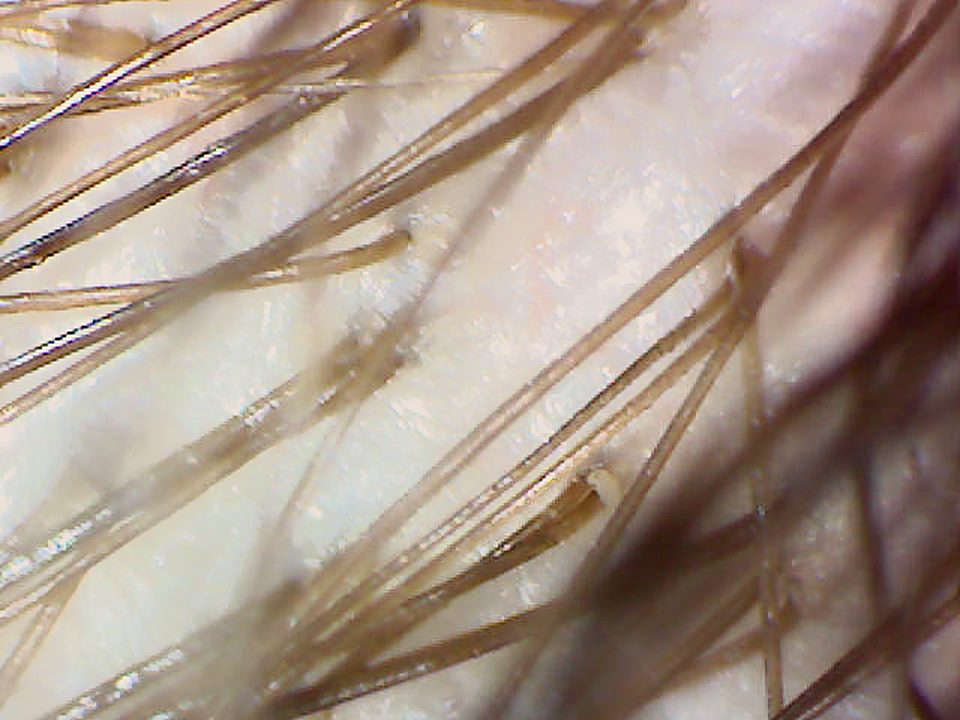
How finasteride works
In pattern hair loss, the hormone DHT gradually shrinks genetically sensitive follicles on the top of the head. Each new hair grows back a little thinner, a process called miniaturization. Finasteride blocks the enzyme that turns testosterone into DHT, lowering DHT so the shrinking slows. It doesn’t act on hair directly; it changes the environment follicles grow in, which is why the effect takes several growth cycles to show.
The timeline
| When | What’s typical |
|---|---|
| Months 0–3 | Usually nothing visible. The label says daily use for three months or more is generally needed before benefit.1 Some people report early shedding, though it’s less consistently described than with minoxidil. |
| Months 3–6 | Loss slows. Fewer hairs in the drain is a weak clue at best; the real change is that hairs stop getting thinner. |
| Months 6–12 | Some men see thickening, most often on the crown. Others hold steady, which still counts as working (see below). |
| 1–2 years | The point the original trials judged. At two years, investigators rated 80% of men on finasteride as having increased hair growth, and the hair-count gap versus placebo was 138 hairs in the counted crown area.1,2 |
| 5 years | The gap widened to 277 hairs versus placebo, partly because untreated men kept losing hair. On the front of the scalp, 48% showed increased growth and 42% no change.1 |
Why “no change” can be a win
Pattern hair loss is progressive. Without treatment, the hairs on top keep thinning year after year. So if you start finasteride and a year later your hair looks about the same, that may be the drug doing its job; the five-year data shows how far apart treated and untreated men drift over time.1
The trouble is that stable and worse look alike in the mirror for the first year or two. That’s when people quit, often right before the difference would have shown.
Side effects worth knowing
In the one-year trials, sexual side effects were uncommon and close to placebo: decreased libido 1.8% vs 1.3%, erectile dysfunction 1.3% vs 0.7%, ejaculation disorder 1.2% vs 0.7%.1 The label also lists post-marketing reports of sexual dysfunction that continued after stopping, and of depression and suicidal thoughts. Finasteride is a prescription medicine: talk through the risks with your doctor, and tell them about any mood or sexual changes. It isn’t for women, and the label warns women who are or may be pregnant not to handle crushed or broken tablets.
How to tell if it’s working
Because finasteride’s first effect is usually to stop the thinning, the useful signal is the trend in hair thickness on top compared with the hair at the back of your head, which DHT doesn’t shrink. On treatment that’s working, that ratio holds steady or rises. Untreated pattern loss pulls it down over time.
Take a baseline before your first dose, then measure the same spots every 2–3 months. A year in, you’ll have a trend instead of a feeling. (Photos won’t settle it; here’s why progress photos lie.)
Find out if finasteride is holding the line
GraftReport measures hair thickness on top against your own control area at the back of your head, so “stable” and “getting worse” stop looking the same.
Get the kit — $199How treatment tracking worksCommon questions
How long does finasteride take to work?
The prescribing information says daily use for three months or more is generally needed before benefit is seen. Visible thickening, when it happens, usually takes 6 to 12 months or longer; the main trials judged results at one to two years.
Is no change on finasteride a good result?
Often, yes. Pattern hair loss gets worse over time without treatment, so holding steady can mean the drug is working. In five-year data the gap between treated and untreated men kept widening, partly because untreated men kept losing hair.
Can finasteride regrow a receding hairline?
Results are typically better on the crown. In five-year data for the front of the scalp, 48% of men on finasteride showed increased growth and 42% showed no change.
What happens if I stop finasteride?
The prescribing information says the effect reverses within 12 months of stopping, so hair gained or kept tends to return toward where it would have been without treatment.
Does finasteride cause shedding?
Some people report shedding in the first months, but it is less consistently described than the well-known early shed with minoxidil. Heavy or patchy shedding is worth raising with your doctor.
Sources
- Propecia (finasteride 1 mg) prescribing information. drugs.com/pro/propecia
- Kaufman KD et al. Finasteride in the treatment of men with androgenetic alopecia. J Am Acad Dermatol. 1998;39(4):578–589. abstract
This guide is general information, not medical advice. Hair loss has many causes; see a dermatologist for sudden, patchy or painful hair loss, or before starting or stopping any medication.